


Why Is Green Tea Fanning Chunmee Tea a Practical Choice for Tea Manufacturers?
Green Tea Guide | Product Knowledge
Choosing the right green tea raw material is essential for manufacturers, tea brands, and wholesale distributors. Product consistency, infusion performance, flavor, and production costs all influence the final tea product.
Green Tea Fanning Chunmee Tea combines the characteristic flavor profile of Chinese Chunmee green tea with a smaller particle size that can support efficient extraction and convenient tea bag production. Understanding its characteristics and quality requirements helps buyers make more informed sourcing decisions.
Article Summary
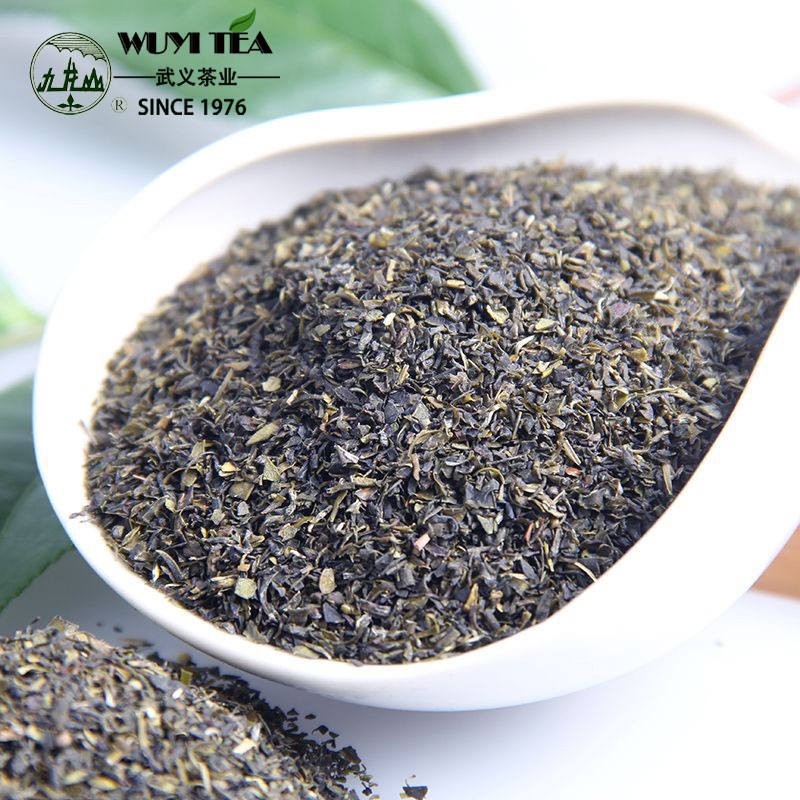
Green Tea Fanning Chunmee Tea is a fine-cut green tea material associated with the traditional Chunmee tea category. Its relatively small particles allow water to contact more leaf surface during brewing, making it suitable for tea bags, blended tea products, and certain commercial beverage applications. This guide explains its characteristics, processing, applications, quality evaluation, storage, and wholesale purchasing considerations.
Article Outline
- Product definition and the relationship between Chunmee and fannings.
- Flavor, aroma, appearance, and infusion characteristics.
- Manufacturing and grading considerations.
- Commercial applications in tea bags and blended beverages.
- Quality inspection, purchasing, and storage recommendations.
- Supplier selection and frequently asked buyer questions.
1. What Is Green Tea Fanning Chunmee Tea?
Chunmee is a traditional Chinese green tea known for its slender, curved leaves, which resemble small eyebrows. The name Chunmee is commonly associated with the Chinese term Zhenmei (珍眉). It is widely recognized in international tea markets for its refreshing taste, brisk character, and versatility.
Green tea fannings are small tea particles separated during processing and grading. Compared with larger whole-leaf tea, fannings generally have a smaller particle size and greater exposed surface area relative to their mass.
Green Tea Fanning Chunmee Tea therefore refers to fine tea material derived from or associated with Chunmee-style green tea. However, buyers should confirm the actual raw material, particle-size distribution, and product specification with their supplier rather than assuming every product sold under this name has identical characteristics.
Traditional Tea Identity
Based on the recognizable characteristics of Chinese Chunmee green tea.
Fine Particle Structure
Smaller particles can provide relatively rapid contact between tea and hot water.
Versatile Applications
Suitable for tea bag blends and other commercial tea formulations.
Commercial Flexibility
Can be evaluated for different product positioning and packaging requirements.
One important distinction is that fannings are not automatically equivalent to tea dust. These terms describe different particle-size categories in commercial tea grading. The exact classification should be confirmed through a technical specification and an agreed sample.
2. Why Does Chunmee Tea Have a Distinctive Character?
The character of Chunmee green tea comes from its raw materials, growing environment, harvesting conditions, and processing techniques. These factors influence the aroma, liquor color, mouthfeel, and overall drinking experience.
2.1 A Recognizable Leaf Appearance
Traditional Chunmee whole-leaf tea is associated with slender, twisted leaves and a curved eyebrow-like shape. The appearance of fannings is different because the material consists of smaller particles rather than intact twisted leaves.
For commercial buyers, this means that visual evaluation should focus on color consistency, particle distribution, cleanliness, and the absence of excessive foreign material.
2.2 A Refreshing and Brisk Flavor
Chunmee green tea commonly offers a refreshing vegetal character with a brisk taste. Depending on the grade, raw materials, and processing conditions, its flavor may include mild roasted, nutty, or slightly astringent notes.
Because fannings have a relatively large exposed surface area, extraction can occur more quickly than with larger leaves. This may produce a stronger infusion, but it can also increase bitterness if the brewing temperature or steeping time is not controlled.
2.3 Factors That Influence the Final Flavor
- Harvesting season: Different harvest periods can produce different leaf tenderness and flavor intensity.
- Raw material selection: Leaf maturity and material composition influence the finished tea.
- Heat fixation: The heating process helps prevent excessive enzymatic oxidation.
- Drying conditions: Proper drying supports product stability and characteristic aroma.
- Storage: Moisture, oxygen, light, and surrounding odors can affect tea freshness.
3. How Is Green Tea Fanning Chunmee Tea Processed?
Understanding the production process helps buyers assess product consistency and identify the quality-control points that matter during sourcing.
Step 1: Fresh Tea Leaf Selection
Fresh tea leaves are selected according to raw material requirements. Their freshness, maturity, and cleanliness influence the quality of the finished product.
Step 2: Heat Fixation
Fresh leaves undergo heat treatment, commonly through pan firing in traditional Chinese green tea production. This process deactivates enzymes responsible for excessive oxidation and helps preserve the green tea character.
Step 3: Rolling and Shaping
The leaves are rolled to develop the desired physical structure. Traditional Chunmee processing produces slender, curved leaves. Rolling also influences the release of tea compounds during subsequent brewing.
Step 4: Drying
Controlled drying reduces moisture to a suitable level for storage and handling. Proper drying is important for maintaining product stability and reducing the risk of deterioration.
Step 5: Sorting and Fanning Separation
Finished tea is sorted according to particle size and other grading characteristics. Smaller particles may be separated as fannings, depending on the production and grading system.
Step 6: Quality Inspection and Packaging
The finished material is inspected for appearance, aroma, moisture, cleanliness, and other agreed specifications before packaging. Buyers should request representative samples and applicable test documentation for their intended market.
Important purchasing point:
The final quality of Green Tea Fanning Chunmee Tea depends on the raw material and the complete processing process, not particle size alone. A fine particle structure does not automatically guarantee a better flavor or higher quality.
4. What Are the Main Product Characteristics?
Before selecting a supplier, buyers should understand the basic characteristics that influence product performance and commercial suitability.
| Evaluation Item | Typical Characteristics | What Buyers Should Check |
|---|---|---|
| Tea Type | Chinese green tea material | Raw material identity and product description |
| Particle Size | Fine particles or fannings | Particle-size distribution and uniformity |
| Dry Appearance | Green to olive-green tones, depending on the lot | Color consistency and cleanliness |
| Aroma | Fresh, vegetal, and potentially lightly roasted | Absence of stale, musty, or foreign odors |
| Liquor Color | Yellow-green to light yellow-green, depending on extraction | Clarity and consistency under standardized brewing |
| Taste | Brisk, refreshing, with possible mild astringency | Bitterness, strength, and aftertaste |
| Moisture | Must meet the agreed specification | Test results and applicable product standards |
These descriptions are general references rather than guaranteed specifications. Actual values and sensory characteristics should be established using the supplier's current product sample, technical data, and agreed inspection criteria.
5. Which Applications Benefit from Green Tea Fannings?
Due to their relatively small particle size and practical extraction characteristics, green tea fannings can be considered for several commercial applications. The final suitability depends on the required flavor, filtration system, formulation, and product positioning.
5.1 Tea Bag Manufacturing
Tea bags are one of the common applications for green tea fannings. Smaller particles can help water penetrate the tea material and extract soluble components during relatively short brewing periods.
For manufacturers, important considerations include particle uniformity, dust content, brewing strength, and compatibility with the filter paper or mesh used in production.
5.2 Blended Green Tea Products
Green tea fannings can serve as a base material in blended tea formulations. They may be combined with other tea materials, herbs, or approved flavor ingredients to create products with different aroma and taste profiles.
Consistent raw materials help manufacturers maintain a more predictable flavor profile across production batches.
5.3 Foodservice and Hospitality
Hotels, restaurants, catering companies, and beverage service providers often require tea materials that are convenient to prepare and deliver a recognizable flavor. Fannings may be considered for standardized tea bag products used in these environments.
5.4 Commercial Beverage Formulations
Some beverage manufacturers evaluate fine-cut green tea material for extraction-based applications. The extraction method, filtration requirements, flavor stability, and production equipment should all be considered before selecting a suitable grade.
5.5 Private Label Tea Products
Importers and distributors developing their own tea brands may use green tea fannings as part of a commercial product range. Packaging format, labeling requirements, and target-market regulations should be discussed with the supplier in advance.
Application reminder:
Tea fannings are not suitable for every premium loose-leaf product. If the target market values intact leaves and visual presentation, a larger-leaf Chunmee grade may be more appropriate.
6. How Can Buyers Evaluate Tea Quality?
For international tea buyers, choosing a product based only on price or a short product description can create unnecessary purchasing risks. A structured inspection process provides a clearer basis for comparing suppliers.
6.1 Examine Dry Tea Appearance
Observe the color, particle distribution, and overall cleanliness. Excessive foreign materials, inconsistent particle sizes, and unexpected discoloration should be investigated.
6.2 Check Aroma Before Brewing
Fresh green tea should have a clean and characteristic aroma. Musty, sour, chemical, or other unusual odors may indicate storage problems, contamination, or product deterioration.
6.3 Conduct a Standardized Tasting Test
Use the same tea-to-water ratio, water temperature, and steeping time when comparing different samples. This helps buyers evaluate flavor strength and consistency more objectively.
6.4 Review Technical Documentation
Depending on the destination market and purchase agreement, buyers may request the following documents:
- Product specification sheet.
- Certificate of Analysis (COA), where available.
- Pesticide residue test reports.
- Heavy metal test reports, where applicable.
- Microbiological test results, where required.
- Origin and traceability information.
- Relevant food safety and certification documents.
6.5 Confirm Compliance with the Destination Market
Tea imported into different countries may be subject to different maximum residue limits, contaminant requirements, labeling rules, and food safety regulations. Buyers should confirm the applicable requirements before placing an order.
7. What Should Importers Consider When Purchasing?
International procurement involves more than finding a competitive quotation. Buyers should evaluate product suitability, supplier reliability, documentation, packaging, and delivery arrangements together.
7.1 Define Your Product Requirements
Before requesting a quotation, prepare a clear purchasing specification. This reduces misunderstandings and helps suppliers recommend suitable products.
- Product name and tea category.
- Required particle size and grade.
- Preferred flavor and infusion strength.
- Expected annual or monthly purchasing volume.
- Destination country and applicable compliance requirements.
- Packaging type and net weight.
- Required inspection and testing documents.
7.2 Request Samples Before Bulk Orders
Sample evaluation is an important step in bulk tea procurement. Buyers should test the material under their actual production or brewing conditions instead of relying entirely on photographs or product descriptions.
For larger orders, an approved reference sample can also help establish expectations for the commercial shipment.
7.3 Compare Quotations Carefully
The lowest quotation does not necessarily provide the best overall purchasing value. Differences in particle size, freshness, moisture, packaging, testing, and shipping terms may influence the final cost.
| Purchasing Factor | Questions to Ask the Supplier |
|---|---|
| Product Quality | Can you provide a representative sample and detailed specification? |
| Consistency | How are different production batches compared and controlled? |
| Testing | Can you provide relevant test reports for my market? |
| Packaging | Can packaging materials and sizes be adjusted to my requirements? |
| Lead Time | What is the estimated production and delivery schedule? |
| Trade Terms | Which shipping and payment terms can you support? |
7.4 Confirm the Order Specification in Writing
Before production or shipment, confirm the product description, approved sample, quantity, packaging, quality requirements, delivery terms, and documentation in the purchase agreement. Clear written specifications help protect both parties throughout the transaction.
8. How Should Chunmee Green Tea Be Stored?
Green tea is sensitive to environmental conditions. Poor storage can reduce freshness, weaken aroma, and affect the quality of the final infusion. Appropriate packaging and warehouse management are therefore important for distributors and manufacturers.
Recommended Storage Practices
- Control moisture: Keep tea dry and use packaging with suitable moisture-barrier properties.
- Limit oxygen exposure: Use properly sealed packaging to reduce unnecessary contact with air.
- Avoid direct sunlight: Store tea away from strong light and heat sources.
- Prevent odor contamination: Keep tea away from spices, chemicals, perfumes, and other strongly scented materials.
- Maintain clean warehouses: Use dry, clean, and hygienic storage areas.
- Apply stock rotation: Follow first-in, first-out inventory management where appropriate.
For bulk shipments, buyers should also inspect the condition of outer cartons, inner liners, seals, and containers when goods arrive. Storage instructions and shelf-life expectations should be confirmed against the actual product specification and packaging conditions.
9. What Brewing Factors Affect the Final Cup?
Because fannings have smaller particles than whole-leaf tea, brewing conditions can significantly affect the final taste. Excessive heat or prolonged steeping may result in a stronger and more bitter infusion.
Suggested Starting Brewing Parameters
| Parameter | Suggested Starting Point |
|---|---|
| Tea Quantity | Approximately 2 g per 200 ml water |
| Water Temperature | Approximately 75–85°C |
| Steeping Time | Approximately 1–2 minutes |
| Water Quality | Clean, fresh drinking water |
These are starting guidelines, not fixed commercial specifications. Actual brewing conditions should be adjusted according to particle size, desired flavor intensity, tea bag design, and customer preferences.
Tips for a More Balanced Infusion
- Start with a moderate water temperature.
- Use a consistent tea-to-water ratio.
- Avoid excessive steeping time.
- Filter the infusion appropriately if using loose fannings.
- Test different brewing conditions before finalizing a commercial formulation.
10. Why Work with an Experienced Tea Supplier?
For wholesalers, importers, and tea manufacturers, a dependable supplier can make the procurement process more efficient. Beyond providing a product quotation, a professional supplier should understand buyer requirements and communicate clearly about product specifications, samples, quality control, and delivery arrangements.
ZheJing WuYi Tea Industy CO., Ltd. is a company brand to consider when discussing Green Tea Fanning Chunmee Tea sourcing requirements. For buyers evaluating potential cooperation, the most useful starting point is a clear discussion of the required tea grade, intended application, target market, and purchasing volume.
What Buyers Should Expect from a Supplier
- Clear product descriptions and technical specifications.
- Representative samples for quality evaluation.
- Communication about available grades and product characteristics.
- Suitable packaging discussions for wholesale requirements.
- Relevant quality and compliance documentation.
- Transparent quotation and delivery arrangements.
Every buyer has different priorities. A tea bag manufacturer may focus on particle uniformity and extraction performance, while a distributor may pay greater attention to packaging, consistency, and landed cost. Matching the product to the intended application is essential for successful long-term cooperation.
11. Frequently Asked Questions
Q1: What is Green Tea Fanning Chunmee Tea?
Green Tea Fanning Chunmee Tea is fine-particle green tea material associated with the Chunmee tea category. It is generally considered for applications where convenient handling and relatively rapid infusion are important.
Q2: Is Chunmee green tea a type of Chinese green tea?
Yes. Chunmee, also known as Zhenmei, is a traditional Chinese green tea category recognized for its slender, curved leaf appearance and brisk flavor profile.
Q3: What is the difference between Chunmee whole-leaf tea and Chunmee fannings?
The main difference is particle size and physical appearance. Whole-leaf Chunmee contains larger, twisted leaf pieces, while fannings consist of smaller particles. Their brewing behavior and commercial applications may therefore differ.
Q4: Are green tea fannings suitable for tea bags?
Yes. Green tea fannings are commonly considered for tea bag manufacturing because their smaller particle size can support relatively rapid extraction. However, particle distribution and filtration performance should be tested with the intended tea bag material.
Q5: Does smaller particle size mean better tea quality?
No. Particle size alone does not determine quality. Raw material, freshness, aroma, cleanliness, flavor, moisture, and compliance with the agreed specification are also important.
Q6: How can buyers check the quality of Chunmee tea fannings?
Buyers can examine dry appearance, aroma, particle uniformity, brewed liquor color, taste, and applicable laboratory reports. Requesting a representative sample before bulk purchasing is strongly recommended.
Q7: How should Green Tea Fanning Chunmee Tea be stored?
Store it in sealed, moisture-resistant packaging in a cool, dry, clean environment. Avoid direct sunlight, excessive heat, and strong odors to help maintain freshness.
Q8: Can Chunmee fannings be used in blended tea products?
Yes. They may be used as a green tea base in blended products, depending on the desired flavor, particle characteristics, and compatibility with other ingredients.
Q9: What information should I provide when requesting a wholesale quotation?
Provide the required product name, particle size, quantity, destination country, packaging preference, and any testing or certification requirements. This information helps the supplier prepare a more relevant quotation.
Q10: Can I request a sample before placing a bulk order?
Buyers should ask the supplier about sample availability and shipping arrangements. Evaluating a sample under actual brewing or production conditions helps reduce purchasing uncertainty.
12. Final Thoughts: Choosing the Right Chunmee Tea for Your Business
Green Tea Fanning Chunmee Tea offers a practical option for commercial tea applications that require fine tea particles, convenient preparation, and a recognizable green tea flavor. Its suitability depends on the relationship between raw material quality, particle size, processing, brewing performance, and the requirements of the target market.
For importers, distributors, and tea manufacturers, successful purchasing begins with clearly defined specifications, representative samples, appropriate quality testing, and reliable supplier communication. Evaluating these factors before bulk ordering can help reduce quality risks and support consistent finished products.
Whether you are developing a new tea bag product, expanding a wholesale tea portfolio, or sourcing green tea ingredients for commercial production, selecting the right Chunmee material is an important step toward meeting your customers' expectations.
Looking for a Reliable Green Tea Fanning Chunmee Tea Supplier?
ZheJing WuYi Tea Industy CO., Ltd. welcomes inquiries from tea importers, wholesalers, distributors, and manufacturers seeking suitable green tea products for their markets.
Share your product specifications, target quantity, packaging requirements, and destination market with our team. Let us discuss a suitable sourcing solution for your business.
Contact UsProduct availability, specifications, samples, and cooperation details are subject to confirmation.
Send Inquiry



X
We use cookies to offer you a better browsing experience, analyze site traffic and personalize content. By using this site, you agree to our use of cookies.
Privacy Policy